
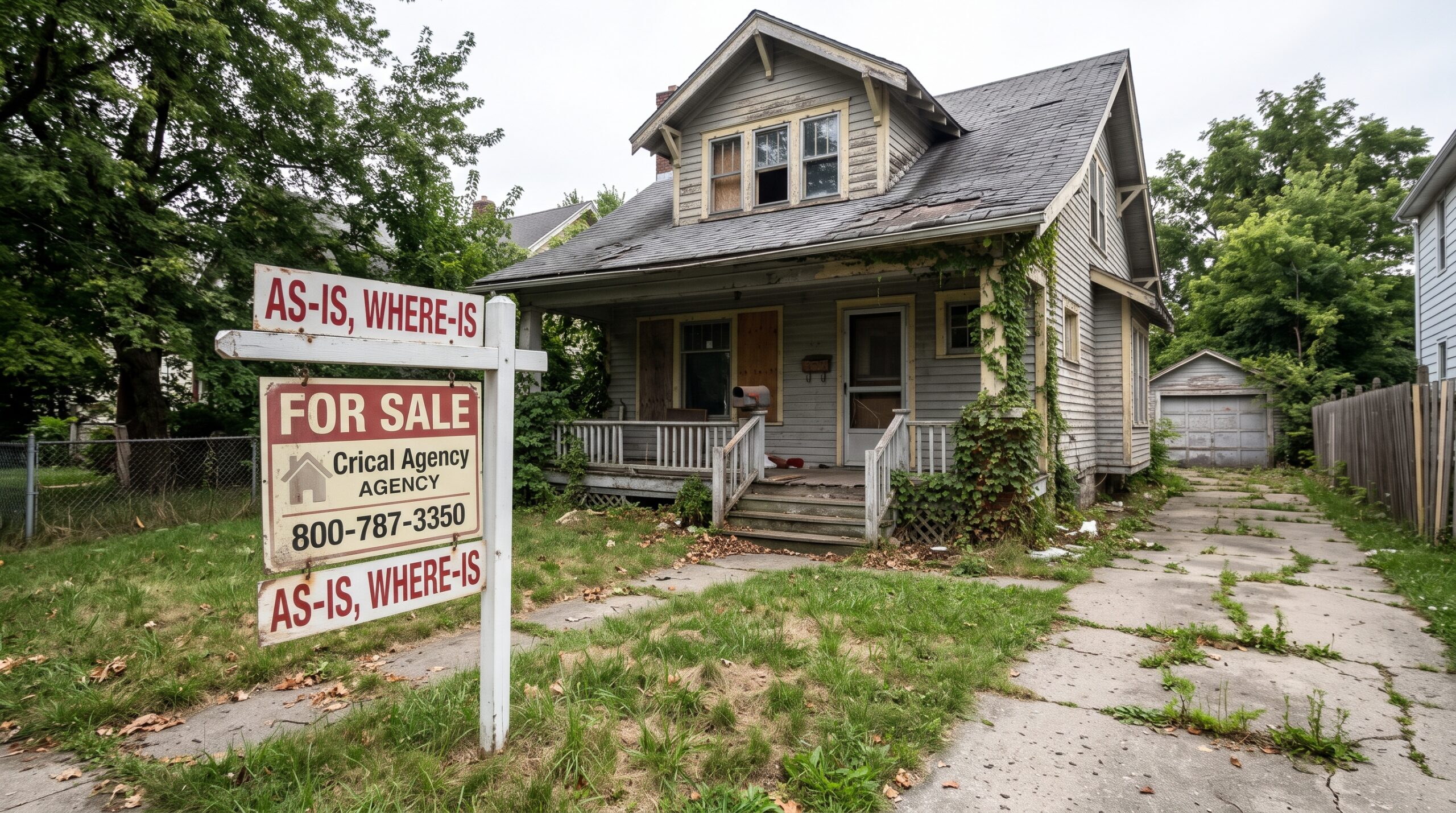
Two of the most common things I hear in real estate transactions sound like opposite ends of the same misunderstanding. A Seller tells me, “We’re selling it as is, so whatever the Buyer finds after closing is their problem.” A Buyer tells me, “It’s an as-is sale, so if something goes wrong, I’m out of luck.”
Neither is right. An “as is, where is” clause makes a claim against a Seller harder, but it is not a shield against everything. Ontario courts have drawn clear lines around what the clause protects and what it doesn’t, and those lines matter whether you’re listing a property, bidding on one, or advising someone who is.
Another version of this article was published in REM Magazine and tailored to realtors; you can review it by clicking the following link: REM Magazine.
What “as is, where is” actually means
Ontario starts from the principle of caveat emptor, or Buyer beware. A Buyer of an existing home is expected to do their own homework, and there’s no implied promise that a resale house is fit to live in. The Ontario Superior Court summarized the rule in a 2023 decision this way: a Buyer who doesn’t protect themselves through the contract or an inspection is generally without a remedy, absent fraud (1000425140 Ontario Inc. v. 1000176653 Ontario Inc., 2023 ONSC 6688, at para. 35).
An “as is, where is” clause puts that principle in writing. The Seller is saying: I’m giving no representations or warranties about the condition of this property, and you’re taking it as you find it. That’s a meaningful statement, and in many disputes it’s the end of the story. But notice the words that keep coming back in the case law: absent fraud, mistake or misrepresentation. That’s where the protection of the clause runs out for the Seller.
Patent defects versus latent defects
Whether a Seller can be on the hook usually turns first on what kind of defect it is.
Patent defects are the ones a reasonable Buyer or home inspector would notice: a cracked ceiling, a broken window, sloping floors, a stain on the basement wall. Under Buyer beware, the Buyer takes the risk of these, and the Seller generally has no duty to point them out.
Latent defects are hidden. In the words of the Court of Appeal, they are “not readily apparent to someone exercising reasonable care in his or her inspection of the property” (Krawchuk v. Scherbak, 2011 ONCA 352, at para. 81). Think water penetration behind finished drywall, rot in a crawl space or a foundation problem that’s been patched over.
The same house can have both. In Krawchuk, the court agreed that some of the problems were obvious and the Buyer had to accept them, while the more serious structural and plumbing problems were hidden (at para. 82).
Four situations where “as is” won’t protect a Seller
1. The Seller knows about a dangerous hidden defect
A Seller who knows about a latent defect that makes the home unfit to live in, or dangerous, and doesn’t disclose it can be liable regardless of an as-is clause (2023 ONSC 6688, at para. 135). Classic examples are serious structural failure, toxic mould or an electrical fault that’s a fire risk.
The danger doesn’t even have to be in the walls. In the widely reported Burlington case involving an $8.45 million home, the Seller knew that the property had been targeted by people looking for a former occupant who was accused of defrauding investors, yet it was marketed as “private and secure.” The Superior Court found an ongoing safety risk to be a latent defect and set the sale aside. The Court of Appeal upheld that result on the basis of fraudulent misrepresentation (1000425140 Ontario Inc. v. 1000176653 Ontario Inc., 2024 ONCA 610, at paras. 25 to 30).
2. The Seller actively hides a problem
Concealment changes everything. The Court of Appeal has explained that concealment means “an act done with an intention to hide from view some defect of which the vendor is either aware or wilfully blind” (Cotton v. Monahan, 2011 ONCA 697, at para. 6).
This can be more ordinary than people expect. In a January 2026 decision out of North Bay, a Seller had repainted the basement baseboards before listing. The court didn’t accept that she was unaware of the water damage she painted over and found that, at best, she was wilfully blind or reckless about it. The Buyer was awarded about $119,600 for repairs plus $10,000 in general damages (Austin v. MacFarlane, 2026 ONSC 463, at paras. 94 to 96).
3. The Seller says something that isn’t true
“As is” covers what the Seller doesn’t promise. It doesn’t cover what the Seller does say. If a Buyer asks “Has the basement ever flooded?” and gets a false or half-true answer, the Seller can be liable for fraudulent or negligent misrepresentation.
That includes the listing. In Austin, the MLS listing the Seller had signed off on described the home as “[v]ery well maintained” and in “[m]ove-in condition” (at para. 83). The court found that, given the longstanding water problems, that picture was “untrue, inaccurate, and misleading” (at para. 91). In that case the Seller had also given written warranties that survived closing, which strengthened the Buyer’s position, but the lesson about listing language applies broadly. In the Burlington case, it was two words in the marketing (“private and secure”) that the courts focused on.
4. The Seller fills out a disclosure form carelessly
Ontario doesn’t require Sellers to complete a Seller Property Information Statement (SPIS). But once a Seller chooses to, the Court of Appeal is clear: the Seller “must do so honestly and accurately and the purchaser is entitled to rely on the representations” in it (Krawchuk, at para. 77).
Honest intentions aren’t enough. The Sellers in Krawchuk wrote that the house had settled with “No further problems in 17 years” and answered “No” to plumbing problems, while they were having sewer backups once or twice a year. The court held that “[t]he standard of care extends beyond honest intentions. The obligation is to provide, to the extent possible, accurate and complete information” (at paras. 16, 76 and 79). The form’s own warning that Buyers should make their own enquiries didn’t save them (at para. 85).
The Real Estate Council of Ontario’s guidance on property information statements is worth reading before you decide whether to use one. If a Seller gives their agent a statement meant for Buyers, the agent has to tell interested Buyers it exists and give a copy to any Buyer who asks.
What “as is” does protect
It’s important to be balanced here, because the clause does real work. In Cotton v. Monahan, the Buyers declined a home inspection and later found electrical, plumbing and structural problems from the Sellers’ do-it-yourself renovations. The Sellers hadn’t known the work was defective when they finished it, and they had lived there for years without problems. The Court of Appeal dismissed the Buyers’ claim. The Buyers knew about the unpermitted renovations, and if they wanted a guarantee, “they were obliged to bargain for an express warranty” (Cotton, at para. 7).
In other words, a Seller who genuinely doesn’t know about a problem, says nothing misleading and hides nothing is in a strong position, and an as-is clause makes that position stronger.
If you’re selling as is
- Don’t treat the clause as immunity. If you know about a hidden problem that affects safety or habitability, disclose it in writing. A known problem disclosed up front is a price conversation; a known problem hidden is a lawsuit.
- Don’t do cosmetic work that covers a known defect. Painting, new flooring or drywall over a water stain or crack can turn an obvious defect into concealment.
- Read your listing before it goes live. Phrases like “move-in ready,” “no issues” or “dry basement” are representations. Make sure every representation is true.
- Think carefully before completing an SPIS. If you do complete one, answer completely, not just honestly. An answer like “settled years ago, no problems since” needs to be fully accurate.
- Get the wording of the clause right. Have your lawyer review the as-is clause and how it fits with the rest of your agreement of purchase and sale before you sign.
If you’re buying a property sold as is
- Get an independent home inspection. An as-is clause is the clearest signal that you need one. If you waive it, you’re accepting the risk of anything an inspector would have found.
- Ask your questions in writing. Put specific questions (water, roof, foundation, electrical, past insurance claims) to the listing agent in writing. The Seller can decline to answer, and a refusal tells you something too. But if the Seller answers, the answer has to be truthful and complete.
- Ask for specific warranties. Even in an as-is deal, you can ask the Seller to warrant particular items you’re worried about and to have those warranties survive closing. The Seller may say no, but you’ll have it on the record, and in Austin surviving warranties helped the Buyer.
- Keep everything. Save the listing, feature sheets, the SPIS and every written answer. If a dispute arises, these are often the most important evidence.
- Act quickly if you find something. If a serious hidden defect shows up after closing, document it with photos and a contractor’s report and speak to a lawyer promptly. Limitation periods apply.
Summary and Legal Consequences of “As-is, Where-is”
- “As is” means the Seller makes no promises about the property’s condition. It reinforces the old rule of Buyer beware; it doesn’t replace the law of fraud or misrepresentation.
- A Seller who knows about a hidden defect that makes the home dangerous or unfit to live in, and stays silent, can still be liable.
- Covering up a defect, even with something as ordinary as fresh paint, can make a Seller liable for a defect that would have otherwise been readily discoverable to the Buyer.
- What a Seller says (in the listing, in a disclosure form or in answer to a Buyer’s question) has to be accurate. “As is” doesn’t excuse a false or incomplete answer.
- A Seller who honestly didn’t know about a problem, and hid nothing, is generally protected. That’s why Buyers still need an inspection.
How we can help
At Vakili Law Group, our real estate team acts for Buyers, Sellers and investors across Vaughan and the GTA, from reviewing an agreement before you sign to closing the deal and resolving disputes that come up after closing. If you’re about to buy or sell a property as is, or you’ve found a problem after closing, call us or schedule a free initial 15-minute consultation by clicking on the following link: https://calendly.com/vlglaw/book-a-call-meeting.
This article provides general information about Ontario law and is not legal advice. Every transaction is different. Speak to a lawyer about your specific situation.